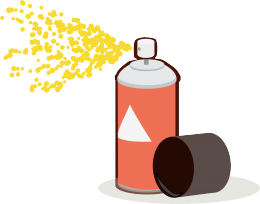
Common aerosol cans include air fresheners, whip cream, cooking oil spray, hair spray, household cleaners, insect sprays, shaving cream, spray cleaners, spray paint, and weed killers
Aerosol cans contain an active ingredient and a liquid or gaseous propellant that is packed under at least 40 pounds pressure per square inch. The cans are comprised of 1% tin and 99% steel and can be recycled (including the pesticide spray cans) once they are completely empty.
If they are not empty do not dispose of them in the regular garbage where they might explode if punctured, which can start a fire or injure collection workers.
The way to recycle depends on whether the container is empty or still has some of the product still in it. If it's empty, you can put it in the bin designated for steel or aluminium at your local recycling facility or curbside program.
To check whether the aerosol can is empty point it at something you don't mind spraying and press the top. If anything comes out of the can or you hear a hissing noise, it must be disposed of as hazardous waste.
Aerosol spray cans that are full or partially full CAN NOT be recycled curbside. They can be taken to any Household Hazardous Waste collection facility or event.
The easiest way to get rid of the aerosol can is simply to use the product until the can is empty, and then dispose of the can in the garbage. Empty cans often still contain remnants and should never be punctured.
Remove plastic tops from empty spray cans, but not the spray nozzle portion, as even when empty the inside is pressurized and can pose a danger if punctured. (Some plastic tops can be recycled as well).