Recyclopedia helps you find information on how to correctly dispose of unwanted items and materials. Please select the item or material you want to dispose of below. We'll tell you whether it can go out with the trash, in your recycling, to a charity, or if it needs special attention.
Sponsors
Zero Waste Newsletter
Sign up for our Zero Waste Newsletter.
Each community has it's own Recyclopedia section. Please type an address or move the red pin to set your location and we'll find your community - or choose your community from the list below the map.
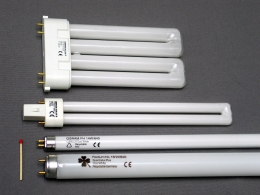
Fluorescent tubes and compact fluorescent bulbs contain significant amounts of mercury that can be inhaled or absorbed through the skin. Mercury is a toxic substance harmful to both humans and wildlife. When fluorescent tubes/bulbs are broken (which happens at landfill sites), the mercury contained within is released, creating a risk of exposure to the mercury vapor. Mercury that is exposed to the air can enter the environment and be deposited in lakes and rivers, where it can be transformed into highly toxic methylmercury. Fish and other wildlife can then ingest mercury passing it up the food chain to humans. Once mercury enters the food chain, it is nearly impossible to remove. The United States Environmental Protection Agency estimates that 600 million fluorescent tubes/bulbs are disposed of annually, with over 80% ending up in landfills. Instead of landfilling your lamps, they can now be recycled.
Each community has it's own Recyclopedia section. Please type an address or move the red pin to set your location and we'll find your community - or choose your community from the list below the map.