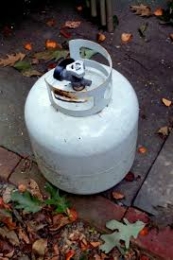
Propane cylinders (20 lb BBQ stye and 1 lb cooking stove/torch style) are accepted as Hazardous Waste.and can be dropped off at the Hazardous Waste depot.
They should NEVER be put in the garbage - These pressurized tanks are never completely “empty” and could contain enough fuel to explode when compressed in a garbage truck or at the landfill.
- Do not throw in trash.
- Do not remove valve from tank
- Do not vent gas; it is both a flame hazard and a source of air pollution.
- Keep cylinder valve closed.
- Store pressurized containers outside in an area where they are least likely to suffer from physical damage or tampering.
- When transporting, secure pressurized cylinders in an upright position on a flat surface.
Some retailers will take the old BBQ tank when purchasing a new one. When you purchase a propane cylinder, ask if it can be returned for refilling, or recycled when it’s empty. If your municipal recycling centre does not accept propane tanks, contact a local propane distributor for proper disposal or exchange of your propane tank. Ask your local Walmart or Home Depot about their trade-in policy.
Or, visit Orange Drop at: http://www.makethedrop.ca/locator for other disposal locations near you.
More information about Propane Cylinders
Single-use cylinders come in two basic styles: a short, fat tank used for camp fuel, and a tall skinny tank used for torch fuel. Both hold about the same amount of fuel - around 1 pound - and are designed to provide a safe, portable fuel source for camp cooking and light, and for small torch units. It is illegal to refill these tanks, so they are to be properly disposed of after they are empty.
Single-use cylinders (even if empty), when discarded in regular household trash, could contain enough fuel to explode when compressed in a garbage truck. But the problem does not end there. Propane cylinders are very expensive for HHW programs to manage properly.
Refillable propane tanks are most commonly used to provide fuel for gas grills. They are designed to hold 20 pounds of propane fuel, and can be refilled by a propane dealer many times. Smaller size refillable tanks are also available.
Other Choices to Consider:
There are alternatives to the single-use propane cylinder for camping and hobby use. White gas is a very inexpensive, readily available fuel. For those who want to use propane fuel, some of the larger camping stores/outfitters sell small propane cylinders that can be refilled. Also, there is a new gas fuel available for camping use: a mixture of propane and butane, sold in an all-aluminum canister. When the canister is empty (it won't support a flame) it can be easily recycled. This fuel mix burns hotter than propane, which means faster cooking and brighter lanterns. It costs about the same, and is becoming readily available.