Dispose of antifreeze at the Snohomish Hazardous Waste Facility, or at any Snohomish County Solid Waste Division Transfer Station or Drop Box. (Up to 10 gallons per customer, per day).
To recycle, keep in original container, or carefully pour the used antifreeze into a clean, plastic jug and screw the lid on tightly. DO NOT mix motor oil or antifreeze with any other material (no water, brake fluid, solvents).
Recycling antifreeze is cost-effective since recycled antifreeze is less expensive than virgin antifreeze. Recycling also saves resources, since ethylene glycol is produced from natural gas, which is a non-renewable resource.
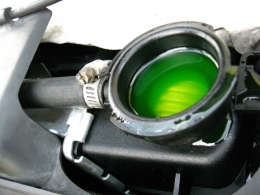
Antifreeze is typically based on ethylene glycol. When added to water it lowers the freezing point and is chiefly used in the radiator of a motor vehicle to keep it from freezing up in the Winter. Ethylene glycol is a toxic, colourless, odourless, almost nonvolatile liquid with a sweet taste that is sometimes accidentally consumed by children and animals due to its sweetness and is poisonous when ingested.
The most common source of ethylene glycol is automotive antifreeze or radiator coolant, where concentrations are high.
Other sources of ethylene glycol include:
Windshield deicing agents
Brake fluid
Motor oil
Developing solutions for hobby photographers
Wood stains
Solvents
Paints
Small amounts may be contained in holiday snow globes.
Some people put antifreeze into their cottage or cabin’s toilet to prevent it from freezing during the winter, resulting in toxicities when animals drink from the toilet.
As antifreeze goes through an engine, it picks up heavy metals, such as lead, cadmium and chromium. The mixture of antifreeze and heavy metals is toxic to the environment and animals.
When using antifreeze products containing ethylene glycol, recommended safety measures include:
1. Cleaning up any spill immediately and thoroughly. Spills may be cleaned by sprinkling cat litter, sand or other absorbent material directly on the spill. Once fully absorbed, while wearing protective gloves, the material may be scooped into a plastic bag, sealed and disposed. The spill area may be scrubbed with a stiff brush and warm, soapy water. The soapy water is not recommended to be drained in a storm drain.
2. Checking vehicles regularly for leaks.
3. Storing antifreeze in clearly marked original sealed containers, in areas that are inaccessible to pets or small children.
4. Keeping pets and small children away from the area when draining the car radiator.
5. Disposing of used antifreeze by taking to a service station (call to see if they'll accept it).
6. If antifreeze is placed in toilets, ensuring the lid is down and the door closed.
The collected antifreeze is sent to special facilities for recycling. All waste antifreeze recycling methods involve two steps:
- Removing contaminants either by filtration, distillation, reverse osmosis, or ion exchange
- Restoring critical antifreeze properties with additives
It is estimated that only 12% of all waste antifreeze generated in the United States is recycled each year.